- Museum of Jewish Montreal
- Hashomer Hatzair Club
Hashomer Hatzair Club
collection1934-1985
18 of 27 descriptions below digitizedOpen enclosing description at source ↗
This description was harvested from its parent's finding aid, but the source catalogue gave no direct link for it. The link opens the nearest enclosing description; look there for Hashomer Hatzair Club.
Digitized below this collection
18 images · displayed from Museum of Jewish Montreal's own server
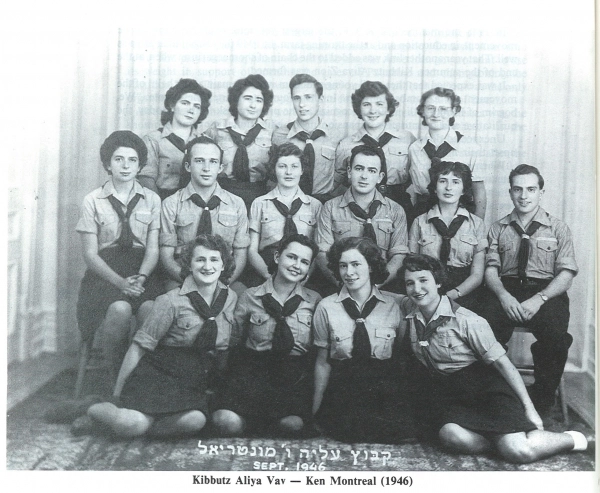 A group portrait of members of the Jewish socialist-Zionist youth group Hashomer Hatzair
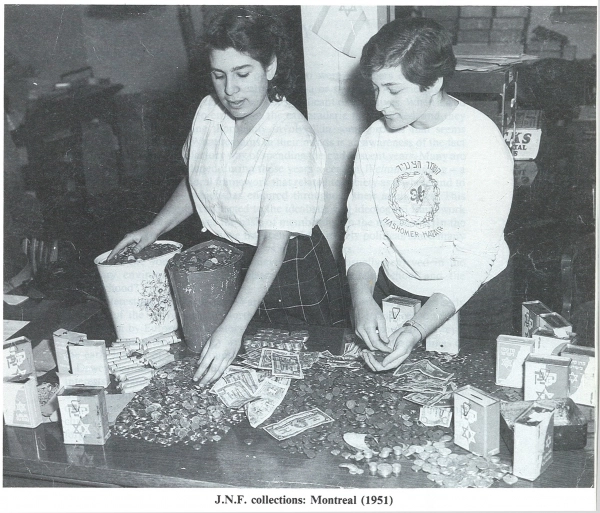 Volunteers and members of the Hashomer Hatzair, a Jewish socialist-Zionist youth group, counting the funds raised from a community event with the Jewish…
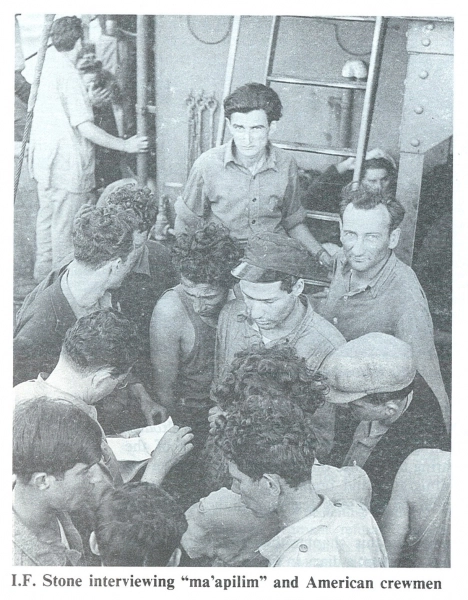 I.F Stone interviewing the Ma’apilim or those brave individuals who attempted to immigrate to Palestine during the 1920s and 1930s, while the British Mandate…
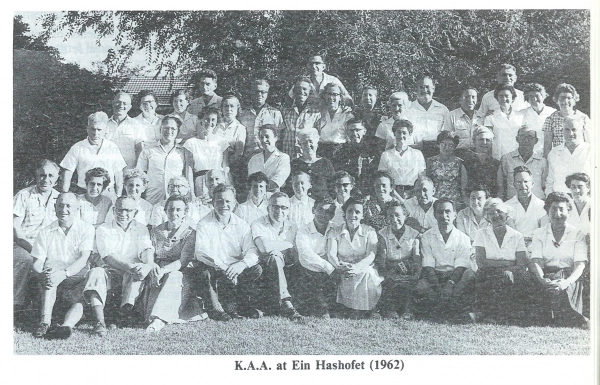 Portrait of Hashomer Hatzair members at their Kibbtuz Ein Hashofet in Israel, 1962
 Group portrait of Hashomer Hatzair Youth in Montreal, who were part of a subgroup called Kibbutz Aliya Aleph, which prepared young members for their eventual…
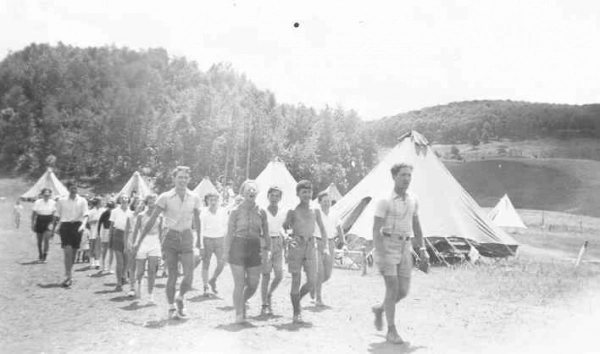 Unknown Hashomer camp in the Laurentians. Probably Camp Hashomer Hatzair. Marching with tents in the background. ca. 1930s or 1940s
 Unknown Hashomer camp in the Laurentians. Probably Camp Hashomer Hatzair. Dancing in circles in the middle of the camp, ca. 1930s or 1940s
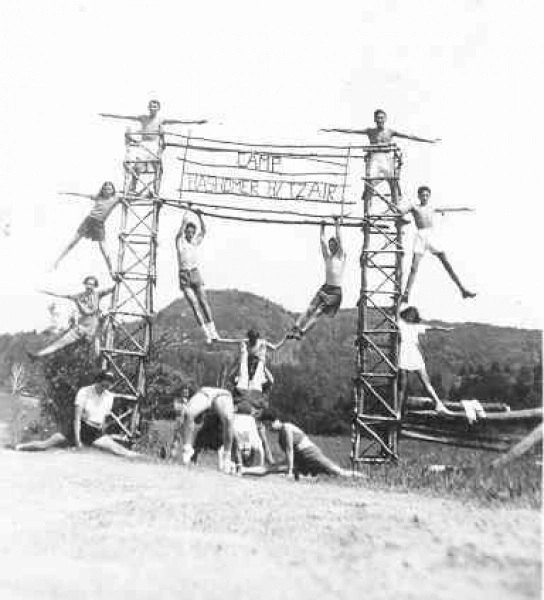 Camp Hashomer Hatzair in the Laurentians. Pyramid of the rest of the campers of the camp, ca. 1930s or 1940s
 Working in the vegetable garden at training farm, Montreal, ca. 1940s
 Hashomer members Shoshanna Koslovitz, Shmuel Kemner, David Koslovitz, Ada Stollman, Dov Vardi, Shmuel Ben-Zvi, David Andrews
 Winter Colony estate of Isaac Heruti or inside the clubhouse, ca. 1940s or 1950s
 Ken Montreal (inside clubhouse) decorations. Fundraiser, ca. 1940s
 Ken Montreal, front of the clubhouse, ca. 1940s
 Ken Montreal members participating in activity at the Ken (clubhouse), ca. 1940s or 1950s
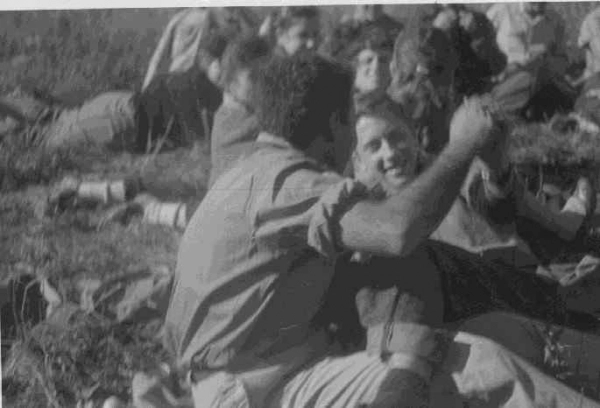 Ken Montreal Northern Regiment at the Winter Colony, ca. 1940s
 Ken Montreal Purim holiday in the Ken (clubhouse). Costume contest, ca. 1940s
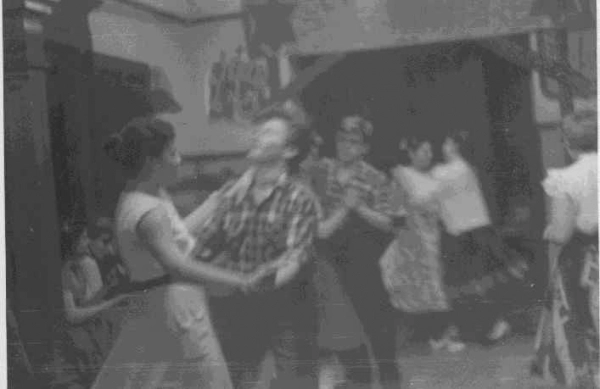 Ken Montreal Purim holiday in the Ken (clubhouse). Hashomer members dancing, ca. 1940s
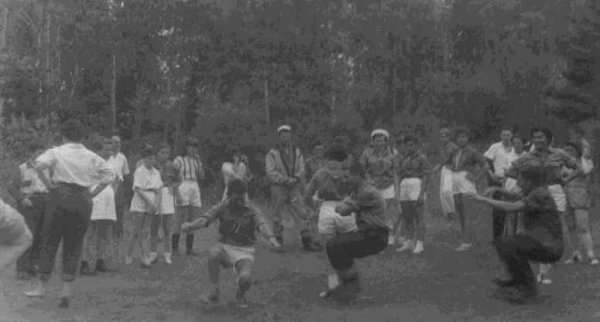 Ken Montreal summer colony perfoming folk dances, ca. 1930s or 1940s
Where
Not on the map yet.
- Held by
- Museum of Jewish Montreal via Museum of Jewish Montreal — map of Jewish Montreal
- Creator
- Marian Pinsky
- Dates
- 1934-1985 (indexed as 1934–1985)
- Level
- collection (source: Story)
- Extent
- 9 places
- Scope & content
- The height of Montreal’s Zionist youth activity occurred between the 1920s and 1940s as the community organized to establish a Jewish State. Alongside the mainstream Young Judaea and the Labour Zionist Habonim, the group Hashomer Hatzair (The Young Guard) was Montreal’s most Left-leaning and often its most popular Zionist youth group – its connections to labour politics making it attractive to immigrant families. Hashomer focused on Hebrew language and culture, and prepared its members to make aliyah (immigration to Israel) and to work on kibbutzim. Hashomer Hatzair was created in 1916 when Hashomer, a British scouting program, joined the Galician Ze’irei Zion (Youth of Zion) nationalist cultural group. By the 1930s, the radical socialist movement had become the strongest Zionist youth group in Eastern Europe. Its members were at the forefront of Jewish resistance during the Holocaust, including the 1943 Warsaw Ghetto Uprising, led by Mordechai Anielewicz. European members brought Hashomer Hatzair to North America in the 1920s, founding the Montreal ken (nest) in 1923. By the 1940s, it boasted 400 members, making it the largest ken in North America. At the ken, shomrim wore scouting-inspired shirts and triangular ties. Their meetings, conducted in Hebrew and Yiddish, emphasized Jewish culture and prepared members for life in Israel. Shomrim met outdoors or in private homes before renting a space at 5250 St. Urbain in the 1940s. A social gathering place, the ken also hosted Israeli shlichim (emissaries) as well as Zionist leaders such as Golda Meir, David Ben-Gurion, and Chaim Weizmann. Hashomer life continued each summer at camps at three locations in the Laurentians, the first opening in 1929, the last, Camp Shomria, opening in the 1950s. From the movement’s onset, hechalutz (pioneering) or hachshara (training) farms were established, including one built near Prescott, Ontario, in 1944, where members prepared for kibbutz life. Another hachshara farm in Smithville, Ontario, was run jointly with Habonim from 1946 to 1951. In 1947, it was replicated by yet another hachshara farm in Sainte-Julie-de-Verchères, just east of Montreal. As in Eastern Europe, where membership in the Hebrew-speaking group symbolized rebellion against Yiddish-speaking parents, Montreal shomrim demonstrated audacity even within their movement. While their American achim (“brothers”) debated the logistics of aliyah, the ideal was quickly transformed into action in Montreal. The first North American member to go to Palestine was from Montreal. In 1931, five Montreal shomrim made aliyah, and were the first from the North American movement to help establish Kibbutz Ein Hashofet in 1937. The Second World War led to a temporary decline of the movement, as leaders were drafted into the army, Palestine was declared “closed” to immigration, and concerns rose about Hashomer’s socialist ideology. The war years allowed the North American chapters to debate their ideology and programs at national conferences, including in 1949 at Montreal’s Monument National Theatre. The subsequent founding of Montreal’s “Kibbutz Aliyah Vav” (a special group that made a new push to prepare members for aliyah), helped reassert the movement’s vitality. But with the establishment of Israel in 1948, many Zionist youth groups shifted their focus to general outreach. When the Jewish community migrated west in the 1950s and 1960s, the Hashomer ken moved to Snowdon where it remained a popular centre. Montreal’s ken declined in the 1970s with the exodus of many English-speaking Jews, making the Toronto ken the only Canadian branch. Camp Shomria near Perth, Ontario, still features the experience of “living on a kibbutz.” Hashomer Hatzair remains active in Israel, as the youth division of the left-wing Meretz Party. Compiled by Marian Pinsky. Sources: Almog, S., Jehuda Reinharz, and Anita Shapira. Zionism and Religion. Hanover: University of New England, 1998. Arnold, Janice. “Pioneer Remembers days in Israel: Monteal Hashomer Hatzair Member.” The Canadian Jewish News, Jun. 21, 1979. Azrieli, David J., Joe King, and Gil Troy. Rekindling the Torch: the Story of Canadian Zionism. Toronto: Key Porter, 2008. Hashomer Hatzair box, file 1. series ZG-JPL-JC (Zionist subject files). Canadian Jewish Congress collection. Canadian Jewish Congress Charities Committee National Archives. Correspondence from Hashomer Hatzair Montreal to H.M. Caiserman. August 28, 1942. Hashomer Hatzair box, file 1. series ZG-JPL-JC (Zionist subject files). Canadian Jewish Congress collection. Canadian Jewish Congress Charities Committee National Archives. Canadian Young Judaea. Online. Habonim Dror North America – The Labour Zionist Youth Movement. Online. “Our History.” Hashomer Hatzair - Camp Shomria Canada. Online. Hurwitz, Ariel. Against the Stream: Seven Decades of Hashomer Hatzair in North America. Tel Aviv: The Association of North American Shomrim in Israel in Conjunction with Yad Yaari, 1994. Gutmanovitcz, Yoni. “Hashomer Hatzair Reunion.” Special to The Canadian Jewish News, April 1916, 1998. Hashomer Hatzair box, file 1. series ZG-JPL-JC (Zionist subject files). Canadian Jewish Congress collection. Canadian Jewish Congress Charities Committee National Archives. Laqueur, Walter. A History of Zionism. New York: Holt, Rinehart and Winston, 1972. Margalit, E. "Social and Intellectual Origins of the Hashomer Hatzair Youth Movement, 1913-20." Journal of Contemporary History 4.2 (1969): 25-46. Peters, Joshua Nathan. The Origins and Development of the NAHAL Brigade in the Israel Defense Forces, 1949-1999. Masters Thesis. Fredericton: University of New Brunswick, 2008. Rome, David. The Heroes of Montreal Jewish Education. Montreal: National Archives, Canadian Jewish Congress, 1992. Siegel, Jack. “Young Guard: Hashomer Hatzair Adheres Strictly to its High Ideals.” The Jewish Standard. September 1946. Hashomer Hatzair box, file 1. series ZG-JPL-JC (Zionist subject files). Canadian Jewish Congress collection. Canadian Jewish Congress Charities Committee National Archives. Tulchinsky, Gerald. Branching Out: the Transformation of the Canadian Jewish Community. Toronto: Stoddart, 1998. Tulchinsky, Gerald. "The Third Solitude: A.M. Klein’s Jewish Montreal, 1910-1950." Journal of Canadian Studies 19.2 (1984): 96-113. Waller, Harold. “A Reexamination of Zionism in Canada.” The Canadian Jewish Mosaic. Eds. Morton Weinfeld, Irwin Cotler, and William Shaffir. Rexdale: J. Wiley & Sons Canada, 1981. 343-57. "Shomer Ha-Tsa‘ir, Ha." The YIVO Encyclopedia of Jews in Eastern Europe. Online. *Images are courtesy of Hashomer Hatzair Archives Yad Yaari, Givat Haviva.
- Location
No place found in this description yet.
- Subjects
- Leisure
- Language
- English
- Harvested
- 2026-10-17T06:33:48Z · source datestamp n/a · mjm